2026 Guide · Doctors and practices
Marketing for doctors in 2026: how to get patients from Google and ChatGPT
The marketing for doctors that works in 2026 looks less like advertising and more like reputation, placed where patients search. In practice: a fast website with one page per procedure, a well-kept Google profile with real reviews, a presence that ChatGPT can understand and cite, and tracking that tells you how many inquiries come in and from where. All within what medical ethics rules allow, which in healthcare are stricter than in almost any other field.
How patients look for a doctor today, in numbers. Sources: OpenAI (Jan 2026), rater8 (survey of more than 1,000 US patients, Feb 2025), DataReportal (Digital 2026: Colombia) and Google Analytics for Dr. Daniel Ramos's case (Sep 2–29, 2026). We did not find an equivalent study of patients in Colombia.
Want these numbers for your business?Book your free demo
The short answer: what works in marketing for doctors in 2026

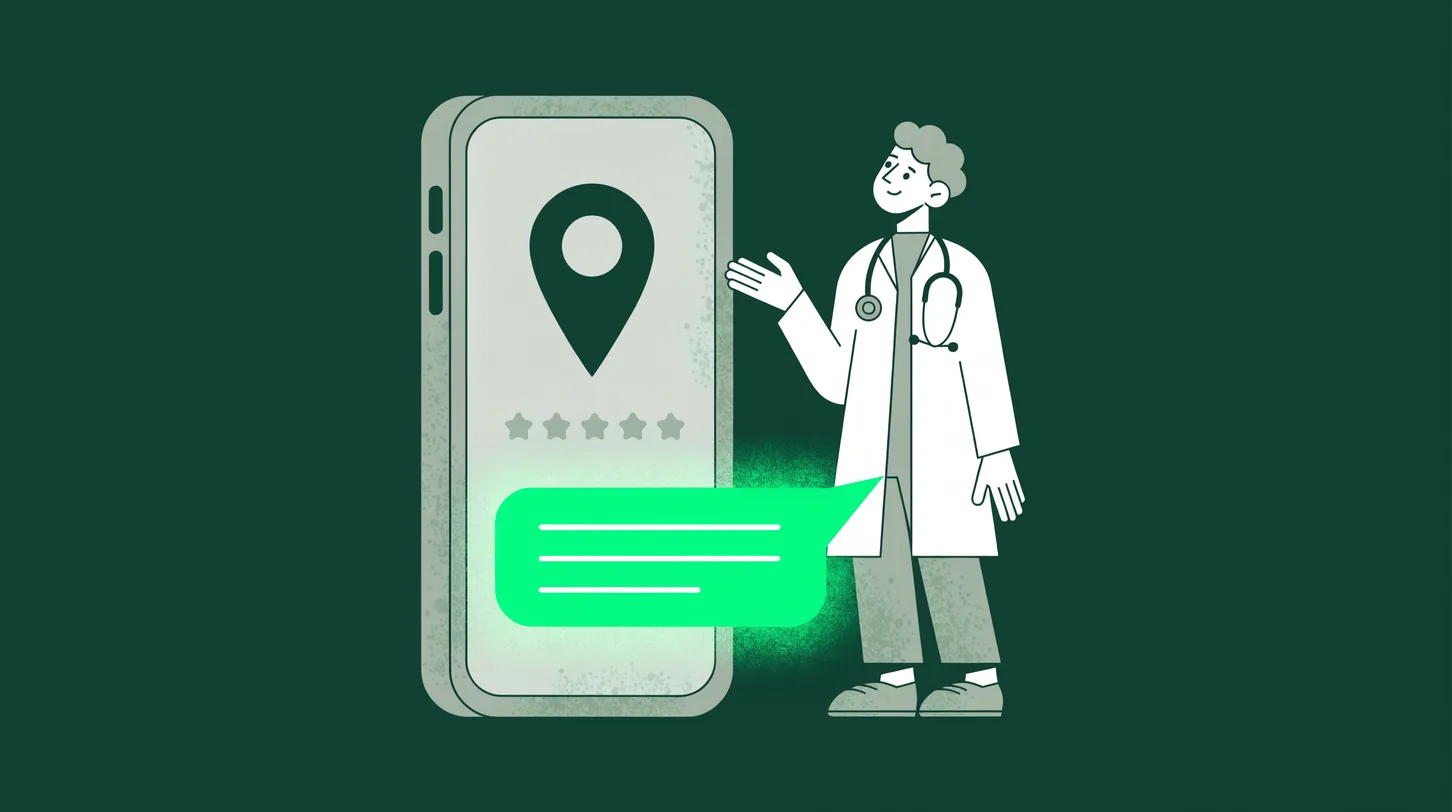
A patient who needs a specialist no longer starts with an insurance directory or the sign on the building. They search on Google, look at the map, read reviews and, more and more, ask ChatGPT. Then they search your name to confirm you are who you say you are. Medical marketing that works puts you, with verifiable information, in each of those places.
This guide is for practices that are already working and want to grow: general practitioners, specialists, plastic surgeons, dentists and clinics that already have satisfied patients and want more qualified patients, not simply more messages. It is written from Colombia, and it is just as useful for US doctors and for practices that serve medical tourists. These are the five pieces everything else rests on.
- A fast, clear website of your own. With one page per procedure, a verifiable track record and a simple way to book.
- Your Google profile. It is what shows up on the map when someone searches «dermatologist near me» or «plastic surgeon in Bogotá».
- Real reviews, with replies. They are the digital version of word of mouth, and patients read them.
- A presence AI assistants can cite. ChatGPT, Gemini or Perplexity recommend what they can find and understand.
- Tracking in your own name. Knowing how many patients reach out from the internet, and through which channel, so you invest where it pays off.
What is not on the list: ads that promise results, aggressive discounts or photos you can't back up. In healthcare that doesn't just work poorly; it can be an ethics violation. We cover it in the section on what the law and medical ethics allow.
How patients choose a doctor today: Google, Maps, reviews and ChatGPT
In Colombia, 41.7 million people use the internet, 77.8% of the population according to DataReportal's Digital 2026 report. Source We did not find a recent, reliable study on how patients choose a doctor in Colombia, so we use the best available references, which come from the United States. Treat them as guidance, not as local figures.
A rater8 survey of more than 1,000 patients, published in February 2025, found that 84% check online reviews before choosing a new doctor, 51% read at least six, and 61% give reviews more weight than referrals from friends and family. Source
RepuGen's 2025 survey of 1,212 people points the same way: almost 78% use Google to check reviews of doctors, 47% require at least four stars to consider a provider, and 40% consider reviews older than one or two years outdated. Source
Then there is artificial intelligence. OpenAI reported in January 2026 that more than 230 million people ask health and wellness questions on ChatGPT every week. Source Back in 2024, a KFF poll found that 17% of US adults used AI chatbots at least once a month to find health information, and 25% of those aged 18 to 29. The same poll showed that only 29% trust that information. Source
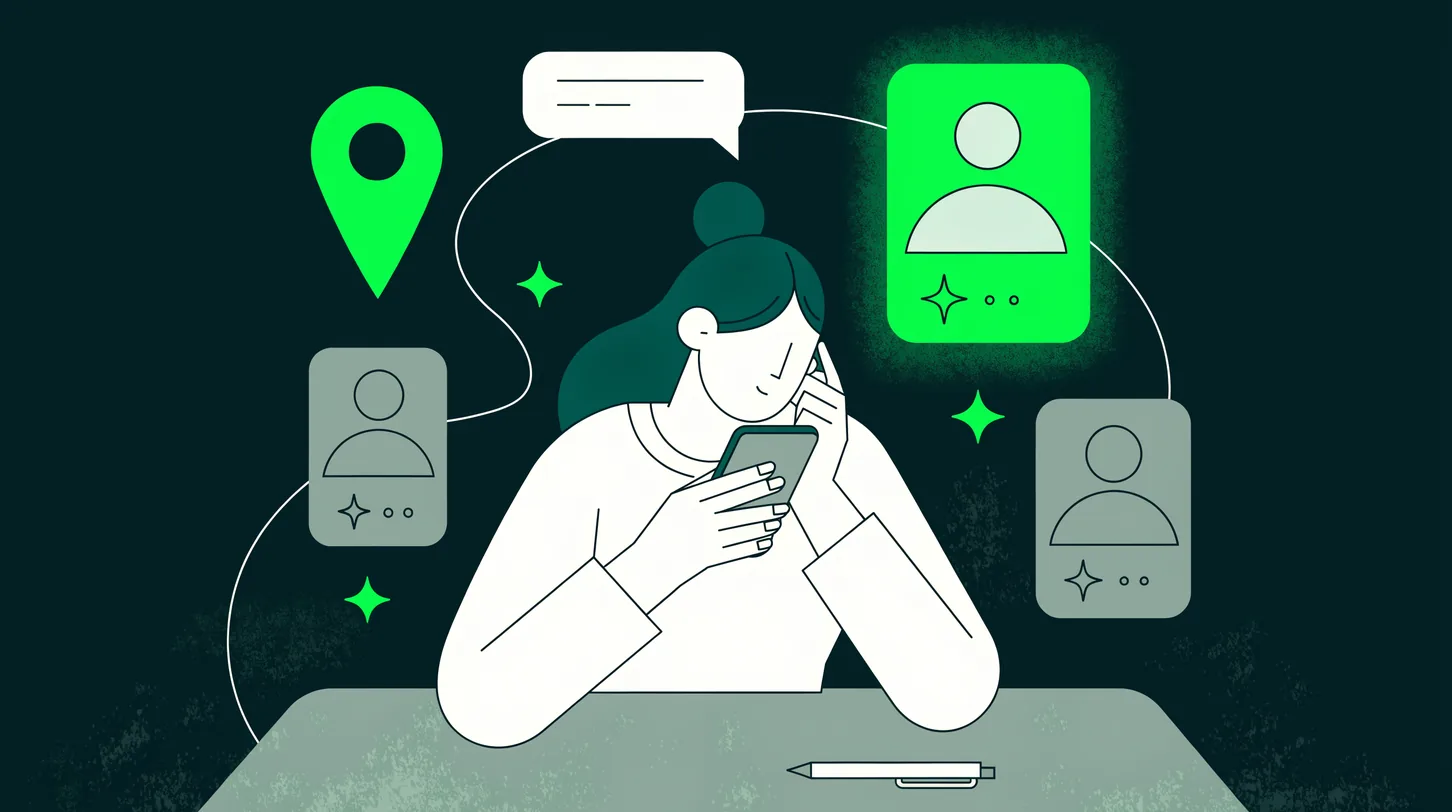
Put those two numbers together and you get real-world behavior: patients use AI to get their bearings, then they verify. They search your name on Google, look at your reviews, visit your site and check your credentials. Your presence has to hold up to that check.
Word of mouth does not disappear; it changes shape. When a friend gives someone your name, the first thing that person does is look you up. If they find nothing, or a profile with no reviews and a site that won't load on their phone, the referral loses its strength.
The website a medical practice needs

Your website is the only place on the internet you fully control. Google, ChatGPT and patients themselves use it to confirm who you are and what you do. These are the pieces it can't be without.
- Fast and built for mobile. Almost all your patients will see you on their phone, often in a spare moment. If the page is slow or they have to zoom in to read it, they leave.
- One page per procedure or treatment. Someone searching «rhinoplasty in Bogotá» or «dental implants in Medellín» wants a page about exactly that: what it involves, who it is for, what recovery looks like, what the risks are and what to ask at the consultation. A single «services» page with a list can't compete.
- Your professional profile, verifiable. Full name, specialty, university and license number. In Colombia you can invite patients to check you in ReTHUS, the national health workforce registry, where anyone can confirm whether a professional is authorized to practice. In the US, the equivalent is your state medical board's license lookup. Source
- A clear way to book. A visible WhatsApp button, a short form and your address with a map. Every extra step is a patient lost along the way.
- Structured data. Code patients never see that tells Google and AI assistants, without ambiguity, who you are, what specialty you practice and where you see patients. Schema.org has specific types for healthcare: Physician (with its variants IndividualPhysician and PhysiciansOffice), MedicalClinic and MedicalBusiness, with properties such as medicalSpecialty. Source Google recommends using the most specific type possible, and notes that this does not guarantee any special appearance in results. Source
- Copy written for patients and reviewed by you. Plain language, no promises, signed by you. Generic text copied from another site helps neither the patient nor Google.
Why does this matter so much in healthcare? Because Google holds topics that can affect people's health to a higher standard. Its documentation puts it this way: its systems give even more weight to content that shows strong experience, expertise, authoritativeness and trustworthiness (what it calls E-E-A-T) on topics that could significantly impact people's health, and of those four, trust is the most important. Source A medical site with no identifiable author, no credentials and generic copy starts at a disadvantage.
If you are wondering what a site like this costs, book a free demo call: we review your case and send you a tailored proposal.
Local SEO and your Google profile: how to show up on the map
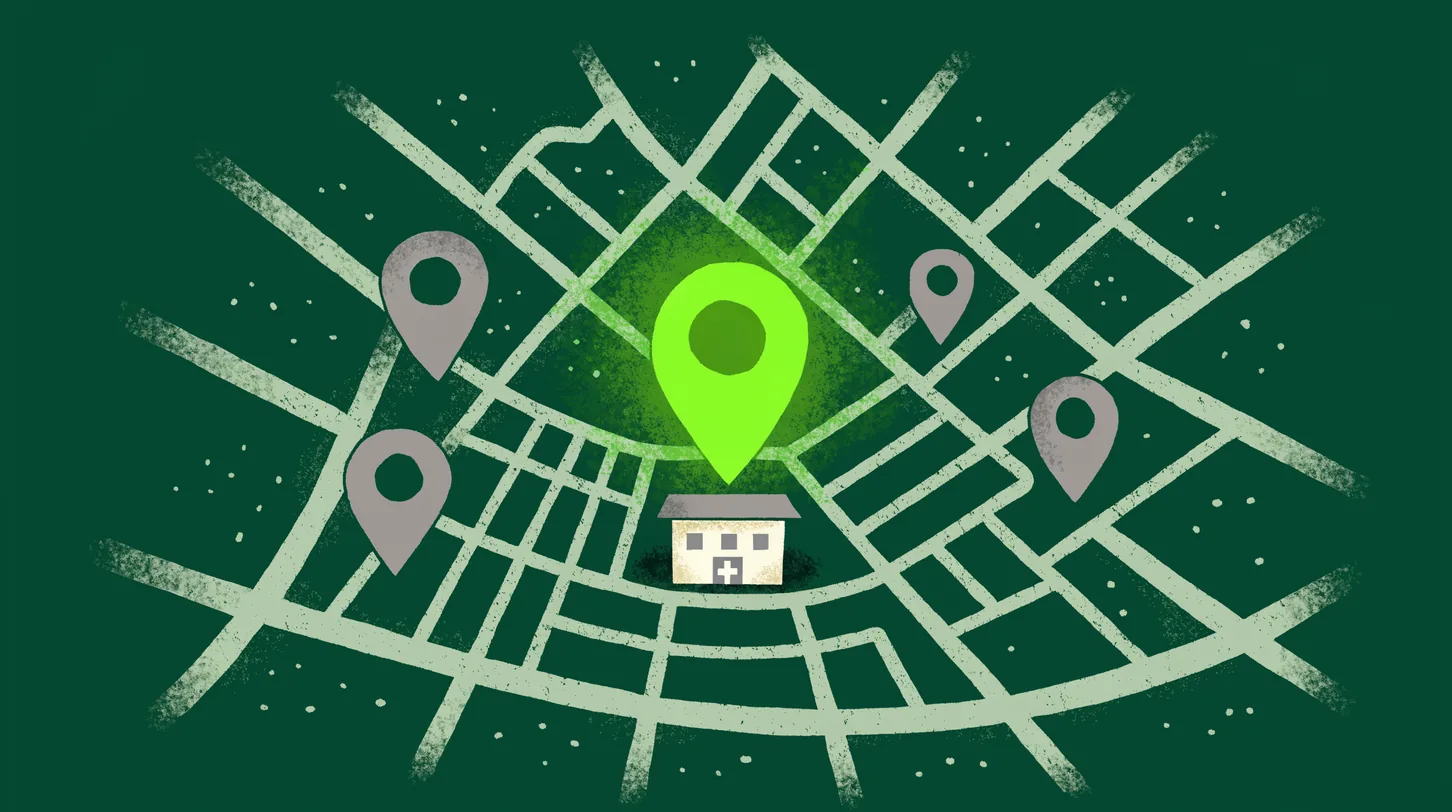
When someone searches «gynecologist in Chapinero», Google shows a map with several practitioners before any website. Google explains that local results are based mainly on relevance, distance and prominence; that more reviews and positive ratings can help; and that there is no way to pay for a better local ranking. Source
There is a rule many doctors don't know: Google allows an individual practitioner to have their own profile if they serve the public and can be contacted at the verified location during stated hours. If you work at a clinic with several doctors, the clinic has its profile and you have yours, with only your name. And the name has to be your real one: adding «best surgeon in Bogotá» breaks the guidelines. Source
These are the steps that matter most:
- Claim and verify your profile. Choose a precise primary category, the one for your specialty, not a generic one.
- Complete it. Hours, phone, a link to your site and real photos of your office and team.
- Ask all your patients for reviews, offering nothing in return. Google's policies prohibit incentives for reviews and asking only those you expect to give five stars. Source
- Reply to every review, including negative ones. Calmly, and without revealing any of the patient's clinical information: medical confidentiality applies online too.
- Use the same details everywhere. Same name, address and phone number on your site, your Google profile and the medical directories where you are listed.
The map is half the work. The other half is getting your procedure pages into Google's regular results, which is search engine optimization. In Bogotá, where competition for medical searches is among the highest in the country, it takes a deliberate strategy, and it is the core of what we do at Clicalto.
How to show up in ChatGPT and other AI assistants
When someone asks ChatGPT «which plastic surgeon do you recommend in Bogotá?», the answer is built from what the assistant can find and understand about practitioners in that city. Nobody controls those answers, so be wary of anyone who guarantees them. What you can do is give it clear, consistent, verifiable material.
- Make sure the assistant can read your site. OpenAI uses a crawler called OAI-SearchBot to surface websites in ChatGPT search, and recommends allowing it in your robots.txt file. Some sites block it without knowing. Source
- Complete structured data. Your name, specialty, address and procedures, described in a format machines read without guessing.
- Content that answers real questions. «How long is recovery from lipo 360?», «What is the difference between upper and lower blepharoplasty?». Clear answers signed by you are what an assistant can cite.
- Consistent mentions beyond your site. Google profile, medical directories, professional societies, press. Always the same name, the same specialty and the same city.
- A site in English, if you treat patients from abroad. Someone in the US looking for surgery in Colombia asks in English and needs to find answers in English.
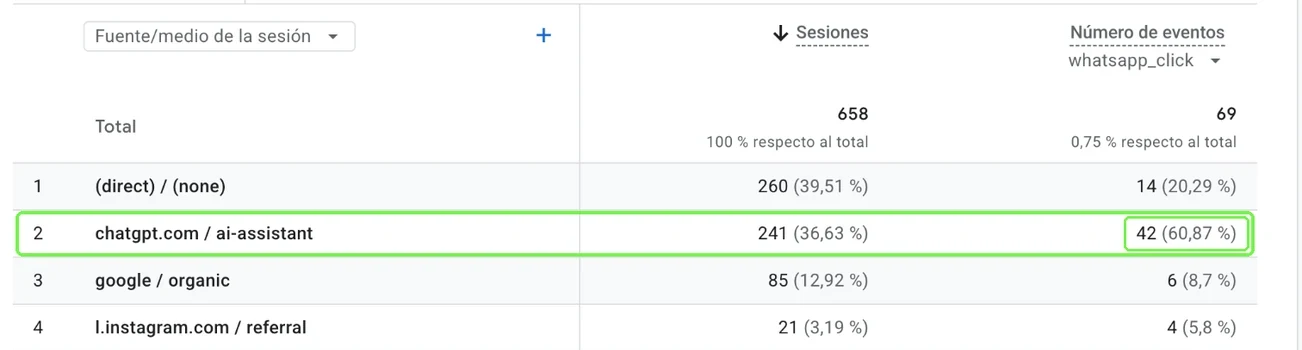
A real case. Dr. Daniel Ramos, a plastic surgeon in Bogotá, had no online presence and practices in one of the most competitive search markets in Colombia. We built him two independent sites, one in Spanish (bodybogota.co) and one in English (bodybogota.com), with complete structured data from day one. In September 2026, 73% of the clicks on his WhatsApp came from ChatGPT, according to Google Analytics; from launch to 25 October it's 42 of 69, along with 241 visits from ChatGPT. Google organic search added 85 visits, and his contact form has brought in 12 qualified consultation requests.
In Search Console, over three months he went from zero to 3,380 impressions (1,220 on the Spanish site and 2,160 on the English site) and 74 clicks. His name appears on Google's first page (average position 8.4 for «dr ramos»), and the English site competes for searches such as «liposuction in colombia», «lipo 360 colombia» and «bbl colombia». It is a real case, not a promise: every specialty and every city is different.
If you want to understand in detail what we do so AI assistants find and cite you, we explain it in AI search optimization services.
What the law and medical ethics allow in Colombia

This section applies to Colombia only, and it is not legal advice, but it is what you should know before publishing anything. If you practice in the US, the rules are different: your state medical board, consumer protection law and HIPAA for patient information. In Colombia, medical advertising is governed mainly by Law 23 of 1981 on medical ethics.
Article 55 says that «the advertising methods a physician uses to attract patients must be ethical». Article 56 lists what professional announcements may contain: the physician's name, the legally recognized specialty, the university that granted the degree, the registration number, and the address and phone number. Article 58 provides for the respective Medical College to inspect announcements and order them modified or withdrawn, and Article 60 prohibits sponsoring publications that do not stick to scientific facts or present them in a misleading way. Source
It is a 1981 law, written before the internet. In 1999 Colombia's Constitutional Court struck down Article 57, which limited mentions of academic titles and positions to scientific publications, finding it a disproportionate restriction on freedom of expression and the right to work. Source How the rest applies to a website, Instagram or a Google campaign is decided by the Medical Ethics Tribunals case by case, and we did not find recent official guidance that spells it out. When in doubt, check with your regional Tribunal Seccional de Ética Médica before publishing.
That said, some practical rules are clear:
- Don't promise results. No «guaranteed results», no «painless», no «you'll look perfect». Beyond medical ethics, Law 1480 of 2011 prohibits misleading advertising, defined as advertising whose message does not match reality or is insufficient, in a way that can mislead. Source
- Before-and-after photos only with explicit, written consent. We did not find a Colombian rule that expressly bans them, but a patient's photo reveals information about their health, and Law 1581 of 2012 classifies health data as sensitive: processing it requires the data subject's explicit authorization. Source The professional confidentiality duty in Article 37 of Law 23 also applies. Use real, unretouched, representative photos, not just your best case.
- Never minors in aesthetic advertising. Law 1799 of 2016 prohibits advertising of aesthetic medical and surgical procedures aimed at minors, and using minors as models in those campaigns. Source
- Real, verifiable credentials. Only legally recognized specialties, with the university and registration that back them.
And patient data. Every form on your site and every WhatsApp conversation collects personal data, and often health data. Law 1581 requires prior, informed authorization, obtained in a way that can be checked later, and that you tell patients what you will use their data for and what rights they have. Source In practice: an authorization checkbox linked to your data processing policy on every form, no clinical details you don't need to book an appointment, and care over who on your team has access to the practice's WhatsApp.
What you can do with peace of mind is also what works best: explain clearly who you are, what you do, what each procedure involves, its risks, what recovery looks like and how to book. Useful, verifiable information meets the ethics rules and, at the same time, is what Google and AI assistants prefer to show.
Checklist to evaluate your current presence (or a marketing agency for doctors)
Answer these questions yourself, or ask them of any digital marketing agency for doctors you are considering. If several answers are «no» or «I don't know», that is where your opportunity lies.
- Do you show up when someone searches your name on Google? And when they search your specialty plus your city?
- What does ChatGPT answer if you ask for a specialist like you in your city? Try it today, with several ways of asking.
- Is your Google profile verified and complete, with recent reviews that have replies?
- Do you have a page for each procedure you most want to do? Not a list: a page with its own content.
- Does your site load fast on mobile, with a WhatsApp button you can see without looking for it?
- Does your site show your credentials and have structured data? Ask whoever built it to show you which.
- Are the domain, Google Analytics and Search Console in your name? They should belong to you, not to the agency.
- Do you know how many patients reached out last month from the internet, and through which channel?
- Does the agency guarantee rankings or results? Bad sign: nobody controls Google or ChatGPT, and in healthcare a promise like that clashes with medical ethics.
- Does it know the medical advertising rules where you practice? If it suggests promising results or posting photos without consent, look elsewhere.
How to measure: the numbers have to be yours

Marketing for a medical practice is measured in consultations, not likes. The minimum is Google Analytics 4 and Google Search Console, both set up under your account, not the agency's. If you switch providers tomorrow, the history stays yours.
Search Console tells you which searches you appear in, how many times you were seen (impressions) and how many people clicked. Analytics tells you where visits come from and what people do on your site. When someone arrives from a link in a ChatGPT answer, it shows up as chatgpt.com among your traffic sources, so you can see it for yourself.
Most important of all, track every click on the WhatsApp button, every call from the site and every form submitted as a conversion (in Google Analytics 4 they are called key events). A WhatsApp click is not a patient yet: it is someone who opened the chat to write to you. But it is the closest signal to a consultation you can measure on your site, and it tells you which channel and which page produced it.
And give it time. Search visibility builds up, and a solid medical presence is built over months, not weeks. Review the numbers every month, compare them with the month before and decide with data.
At Clicalto we build websites for doctors and practices designed to be found on Google and AI assistants, with tracking in your own Google Analytics and Search Console from day one. You see your site before you pay, you only pay if you're satisfied, and you request changes by simple text message.
Frequently asked questions
What does marketing for doctors include in 2026?
The essentials are a fast website with one page per procedure and verifiable credentials, a complete Google profile with real reviews, a presence that ChatGPT and other AI assistants can understand and cite, and tracking in your own name that tells you how many patients reach out and through which channel. All within the medical ethics rules of the country where you practice.
Can I post before-and-after photos in Colombia?
We did not find a rule that expressly bans them, but a patient's photo is health data, which Law 1581 of 2012 classifies as sensitive: you need their explicit authorization, ideally in writing. Use real, unretouched, representative photos, never of minors for aesthetic procedures, and without promising results. When in doubt, check with the Medical Ethics Tribunal.
How do I get ChatGPT to recommend me?
Nobody can guarantee it, but you can give it clear material: a site its crawler can read, complete structured data, content that answers your patients' real questions and consistent mentions of your name, specialty and city on other sites. We explain it in detail in AI search optimization services.
How long does it take to see results?
It depends on your specialty, your city and where you are starting from. A well-configured Google profile can start showing up relatively quickly, while search visibility for a new site is built over months. Be wary of anyone who promises page one in a few weeks.
Do I need a digital marketing agency for doctors, or can I do it myself?
You can do a lot yourself: claim your Google profile, ask for reviews and reply to them. An agency makes sense when you need a site with a solid technical base, content for each procedure, structured data and tracking, and you don't have the time to do it. If you hire one, use the checklist in this guide to evaluate it.
How much does it cost to work with Clicalto?
It depends on what your practice needs. We work with three programs: One Shot (one time), Monthly Shot (every month) and Weekly Shot (every week), and the monthly ones include the site, hosting and maintenance. We send you the price in writing after a free demo call. Details at clicalto.com/en/pricing.
Real case · Plastic surgeon in Bogotá
More than 10 patients booked in his first 3 months. Patients find him on ChatGPT and on Google.
This is the site of Dr. Daniel Ramos, a plastic surgeon in Bogotá.
Patients confirmed by the doctor as of 4 October 2026. Clicks and visits: his Google Analytics; the 73% is from September (2–29) and the screenshot covers 1 July to 25 October. A real case, not a promise.
Demo call · free
Tell us about your business. We'll show you how to reach the first page.
It's for getting to know each other. You tell us about your business, we research for free how people search for you and what it would take for you to show up, and we show you live how an agentic website works.
- You tell us about your business
- We research how people search for you, and how much
- We show you how to show up and how we work
20-minute video call, in English or Spanish. Free, no commitment. If we're not a fit, we'll tell you straight.