2026 guide · AI search optimization
AI Search Optimization: How to Get Your Business Recommended by ChatGPT, Google AI Overviews and Perplexity
AI search optimization is the work of becoming the answer, not the link, when someone asks ChatGPT, Google or Perplexity a question you could solve. This guide explains how AI search optimization works, how assistants decide who to recommend, a 12-point AI visibility optimization checklist, how to get your business recommended by ChatGPT, how to monitor AI search visibility, and how to judge a provider before you hire one. Written from real client data, not industry averages.


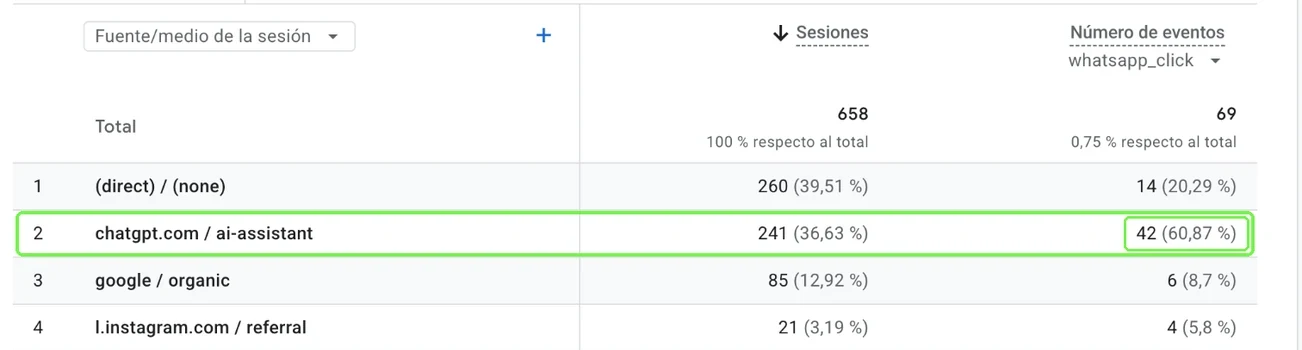
Real numbers from one client, not industry averages. Google Analytics from two Clicalto client sites. The surgeon's figures are from September 2026 (the 73%) and from 1 July to 25 October (the visits).
Want these numbers for your business?Book your free demo
What is AI search optimization? (And why marketers call it GEO, AEO or LLM SEO)

AI search optimization is the practice of making your business the source an AI assistant cites or recommends when it answers a question. The assistants are ChatGPT, Google's AI Overviews and AI Mode, Perplexity, Microsoft Copilot, Claude and Gemini. Where SEO competes for a position on a results page, AI search optimization competes for a mention inside the answer itself. When a homeowner in Phoenix asks ChatGPT for a roofer who handles insurance claims and gets three names, the goal is to be one of the three. People also call the same thing AI visibility optimization, AI search visibility optimization or AI discoverability, and outside the US you will see it spelled AI search optimisation. All of them mean: can an AI find you, understand you and trust you enough to name you.
Marketers have their own jargon for it: generative engine optimization (GEO), answer engine optimization (AEO), LLM SEO or AI SEO. If an agency pitches you any of those, it is the same discipline with a different label. The assistants do not care what you call it. They all retrieve from the same web, extract facts the same way and trust the same signals, so the work behind every name is identical: make your business easy to find, easy to understand and easy to quote.
AI search optimization vs SEO: what actually changes. It is not a replacement for SEO. Every major assistant runs a web search behind the scenes when a question needs fresh, local or specific information (Bing for ChatGPT, Google for Gemini and AI Overviews, its own index for Perplexity). If Google cannot crawl and understand your site, the assistants cannot either. What changes is the unit of success: not a ranking, but a citation; not ten blue links, but one synthesized answer with two or three sources; and a much heavier weight on whether your facts can be corroborated somewhere other than your own site. Think of AI search optimization as SEO plus a second layer that decides which of the pages the search returned deserve to be quoted.
How does AI search optimization work? The three decisions every AI assistant makes
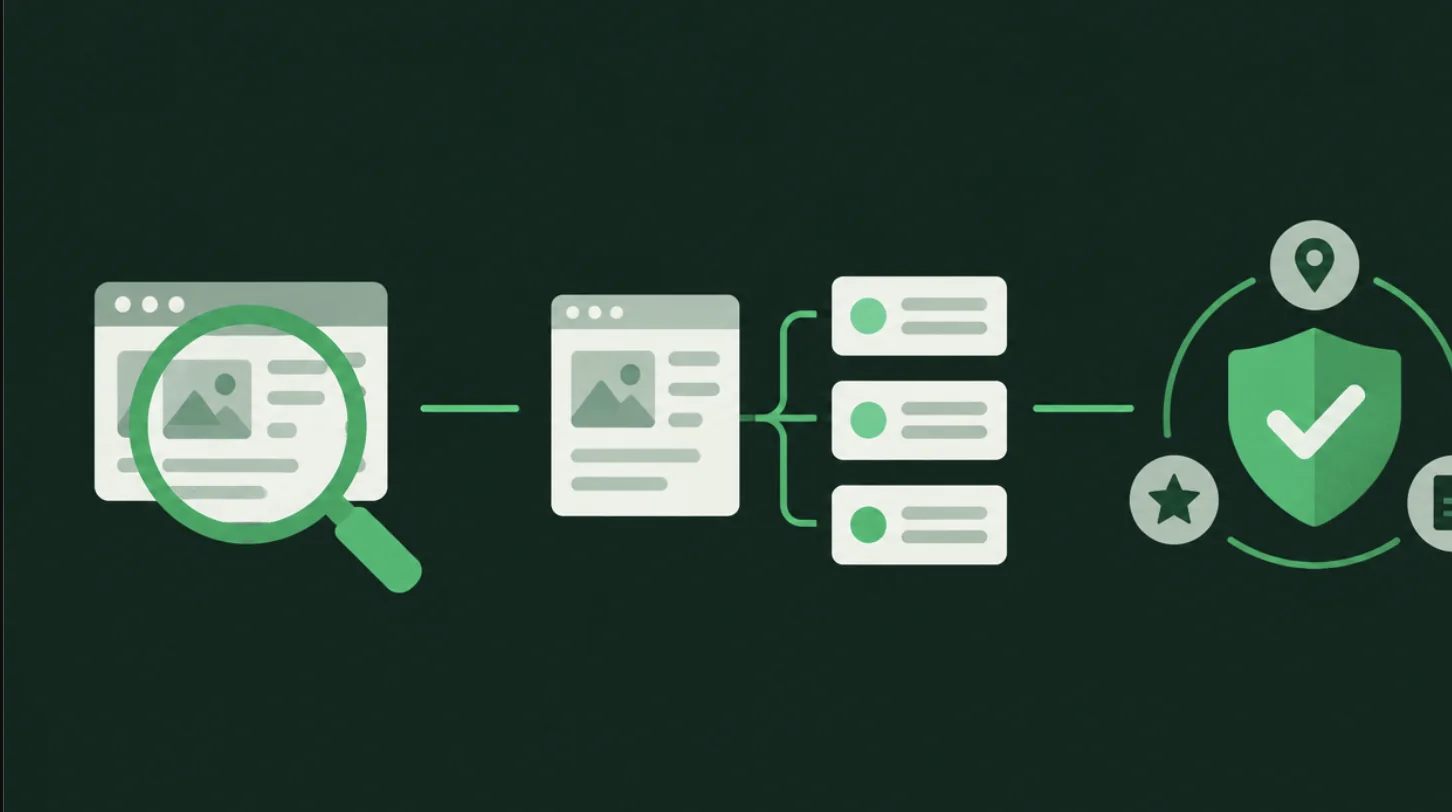
People ask how AI search optimization works as if it were a black box. It is not. Every recommendation an assistant gives is the result of three quick decisions, and understanding them tells you exactly where to spend your effort.
- 1. Retrieval: can it find you? For anything local, recent or specific, the model runs a search and reads the top results. If your page is not in those results, or its content is painted by JavaScript that the crawler never executes, you were never a candidate. Server-rendered HTML, a clean sitemap, fast pages and permission for AI crawlers in robots.txt are the entry ticket. Most AI visibility failures are retrieval failures.
- 2. Extraction: can it understand you? The model has seconds to pull facts out of your page: what you do, where, for whom, at what price, with what proof. Pages that answer one question each, open with a direct answer, use clear headings and carry matching structured data (Organization, LocalBusiness, Service, FAQPage) are extracted correctly. A homepage that says "we craft experiences" extracts as nothing.
- 3. Trust: does it believe you? Assistants triangulate. If your name, address, phone, services and prices are consistent across your site, your Google Business Profile, directories, reviews and press, you are a safe answer. If they conflict, or you exist only on your own domain, the model prefers a competitor it can corroborate. This is why reviews, consistent listings and a maintained Google profile matter more for AI visibility than they ever did for a classic ranking.
Every tactic in the checklist below maps to one of these three decisions. If something does not help the assistant find you, understand you or trust you, it is noise, no matter how it is packaged.
Why AI search visibility matters now: real data from a client site

Opinions about AI search are everywhere. Numbers are rare, so here are ours. Dr. Daniel Ramos is a plastic surgeon in Bogotá whose bilingual site we built and optimized for both Google and AI assistants, targeting patients in the United States. Over the 28 days from 2 to 29 September 2026, 73% of the clicks on his WhatsApp button came from ChatGPT. And it wasn't a one-off month: from launch to 25 October, 42 of his 69 WhatsApp clicks and 241 visits came from ChatGPT, and in the last four weeks the button got 48 clicks, almost double September. Google Analytics now files ChatGPT traffic under a channel group of its own, called AI Assistant, which tells you Google itself treats it as a distinct source.
Enquiries come in through two doors. Through WhatsApp, the 69 clicks above. Through the form, 12 qualified consultation requests since launch, two of them from people who arrived through ChatGPT; one landed with utm_source=chatgpt.com in the form data: a patient in the United States describing the procedures she wanted.
The point is not that every business will see two out of three enquiries arrive from ChatGPT. The point is that when a site is built so an assistant can find it, understand it and trust it, the assistant sends real people who are further along than a Google visitor, because they already asked the question and got your name as the answer. That is the return on AI search optimization, and it shows up in your analytics within weeks, not quarters.
The AI visibility optimization checklist: 12 things that move the needle
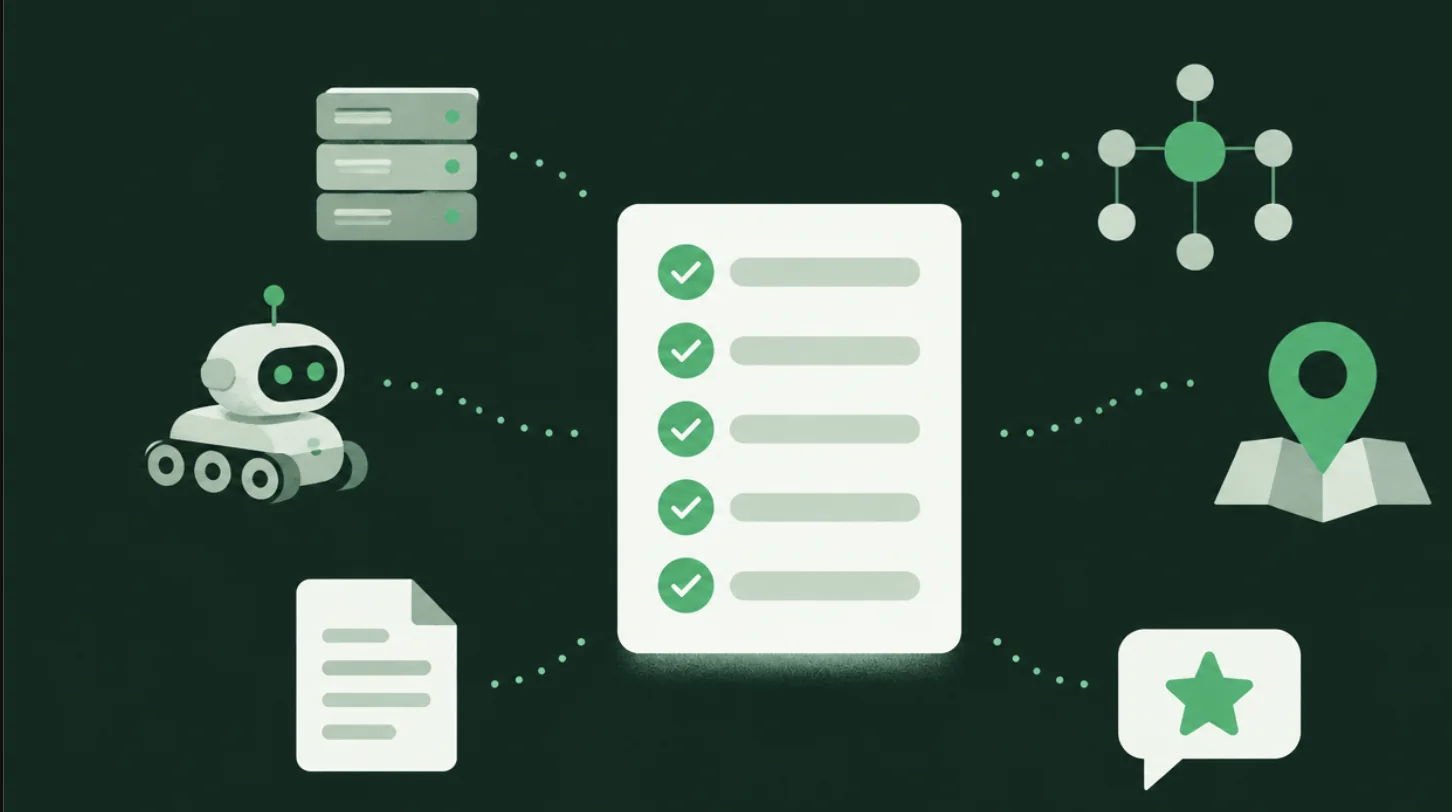
This is the AI search strategy we run on every client site, whether the goal is a service, a product or a location: AI optimization for product visibility follows the same rules as for a clinic or a law firm. The list is ordered by impact for a small or mid-size business; the first six are non-negotiable, and together they cover AI search content optimization without rewriting your whole site.
- Serve real HTML. Content must be in the page source, not rendered by JavaScript after load. Most AI crawlers do not execute scripts. Server-side rendering or static generation is the fix, and it is the single most common AI visibility problem we find in audits.
- Let AI crawlers in. Check robots.txt for GPTBot, OAI-SearchBot, ClaudeBot, PerplexityBot, Google-Extended and Bingbot. Many sites block them by accident through a plugin, a CDN rule or a security setting. Blocked means invisible.
- One URL per question. "Cost of a roof replacement in Phoenix", "Do you take patients from abroad?", "Invisalign vs braces for adults". Each real question your customers ask gets its own page or its own anchored section, with a heading in the customer's words. Assistants cite pages that answer one thing well.
- Answer first, explain second. Open every page and section with a two-sentence direct answer, then the detail. That opening paragraph is what gets quoted. This is the heart of AI search content optimization.
- Structured data that matches the page. Organization or LocalBusiness with name, address, phone, hours and geo; Service for each service; FAQPage for questions; Person for the people clients look up; Review only where reviews are real. Schema is how the model reads facts without guessing.
- A maintained Google Business Profile. For local queries, assistants lean heavily on Google's business data: category, hours, photos, reviews and your reply to each review. A profile that matches the site word for word is a trust signal on its own.
- Entity consistency everywhere. Same business name, same address format, same phone, same service names on your site, Google, Apple Maps, Yelp, industry directories, social profiles and press. Consistency is what lets the model confirm you are one real entity. This is what makes you discoverable to an AI as one real business.
- An llms.txt file. A plain-text file at yourdomain.com/llms.txt that says what you are, what you do, for whom, where, and links to your key pages. Not every assistant reads it yet; the ones that do read it before anything else, and it costs an hour.
- Comparison and list content. "Best X in City", "X vs Y", "how much does X cost in 2026". These are the pages assistants pull from when a user asks for options. Be honest, include competitors, and you will be cited as the balanced source.
- Reviews with substance. A review that says "great service" is ignored. A review that names the service, the city and the outcome is quotable. Ask happy customers specific questions and the reviews will write themselves.
- Fresh, dated content every month. Models weight recency for anything commercial. One new page a month (a service, a neighborhood, a question, a case) keeps you in the current-answers set.
- Bilingual when your market is. If you serve people in two languages, publish full pages in both, with correct hreflang, not a translation widget. Assistants answer in the user's language from sources in that language.
How to rank in ChatGPT: getting your business recommended by ChatGPT and AI assistants

The question we hear most often is some version of how do I get ChatGPT to recommend my business? There is no place to "register" your business with ChatGPT, and no ranking to buy. For a local business the mechanics are concrete. When someone asks ChatGPT for a dentist in Austin, a family lawyer in Denver or a cosmetic surgeon who treats international patients, it runs a web search, reads the top local results, cross-checks Google's business data and reviews, and picks the names that show up consistently with the specifics the user asked for. So ranking on ChatGPT means:
- Make the specifics explicit on your site. Neighborhood, city, services, languages spoken, insurance accepted, whether you serve customers from out of state or abroad, price ranges where you can. Assistants match specifics, and vague sites lose to specific ones every time.
- Earn a place on the lists that already rank. Assistants love "best X in city" articles from third parties. Find the ones Google shows for your query and get listed: a directory, a local guide, a chamber of commerce page, a press mention. That is the corroboration the model needs before it cites a local business.
- Feed the Google Business Profile. Weekly photos, replies to every review, posts about what is new. Google's data is a primary source for every assistant, including ChatGPT.
- Ask for the review that answers the question. "Would you write two lines about the service you had, how it went, and where you came from?" Reviews with that detail are what get quoted in an answer.
- Publish the question page. If people ask "is it safe to travel to Colombia for surgery" or "do roofers in Phoenix handle hail-damage claims", the business with an honest, detailed page on exactly that gets the recommendation. Nobody else bothered.
Then track it. GA4 already attributes chatgpt.com as a referrer, ChatGPT often keeps utm_source=chatgpt.com on the links it cites, and a "how did you find us" field on your form closes the loop. Ask ChatGPT, Perplexity and AI Mode the same 20 questions once a month. The first time you see your own name in the answer is a good day.
AI search optimization for Google AI Overviews and AI Mode
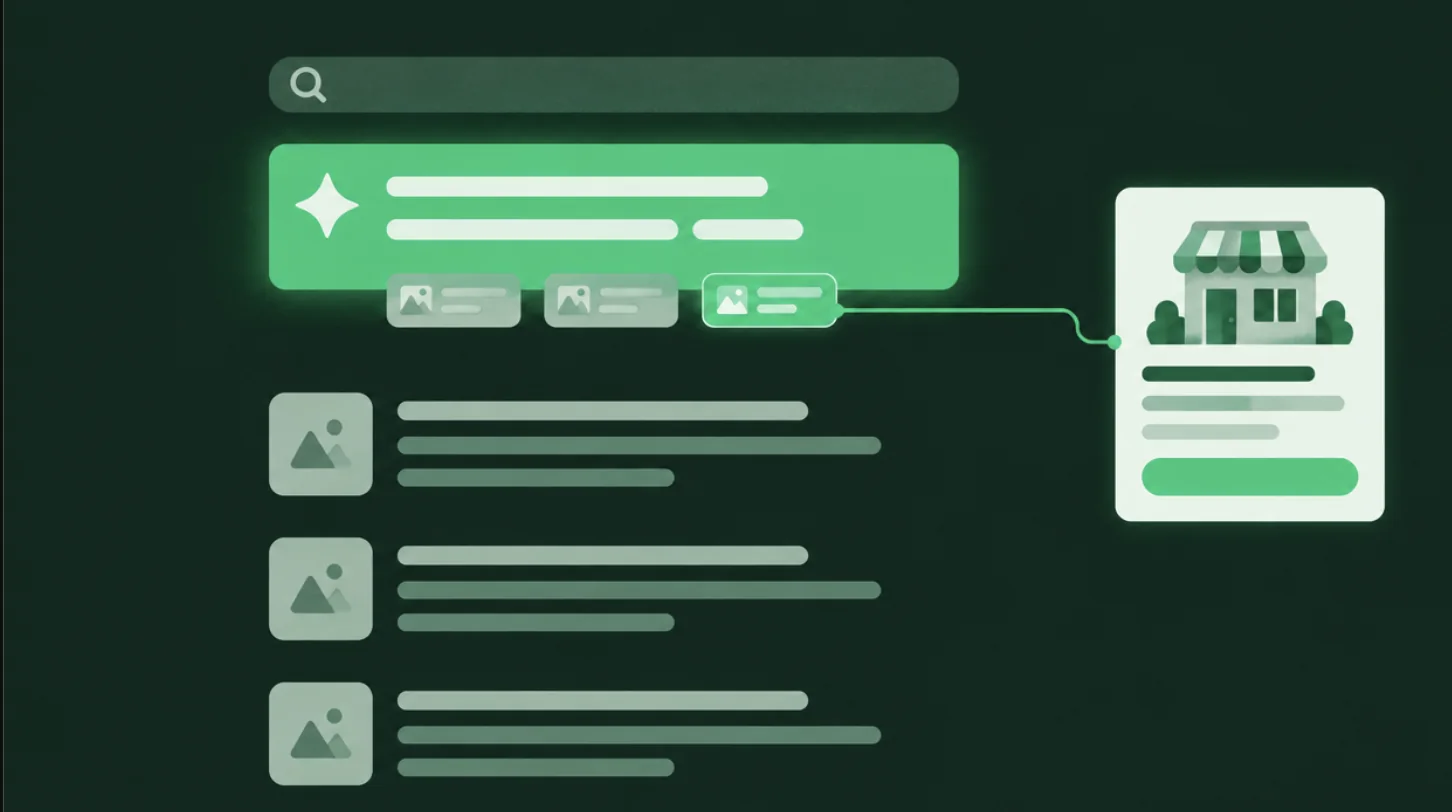
Google is doing the same thing inside its own results. AI Overviews summarize the answer above the links, and AI Mode turns the whole results page into a conversation. For a business this means two things. First, the classic blue link is worth less for informational queries: many people read the overview and never click. Second, being cited inside the overview is now the prize, and Google chooses citations the same way the other assistants do: pages that answer directly, with structure, from sources it can corroborate.
To optimize content for Google AI Overviews, do not fight the format. Make sure your pages are the ones worth citing (answer first, clear structure, verifiable facts), keep a fast, crawlable site with matching structured data, and move your commercial pages toward the questions people ask right before they buy, where a click still happens. Everything on the checklist above serves both Google and the assistants. There is no separate "AI Overviews" product you buy on the side, and anyone selling you one is selling you the same checklist under a new name.
AI search monitoring: how to measure AI visibility (and whether you need a platform)
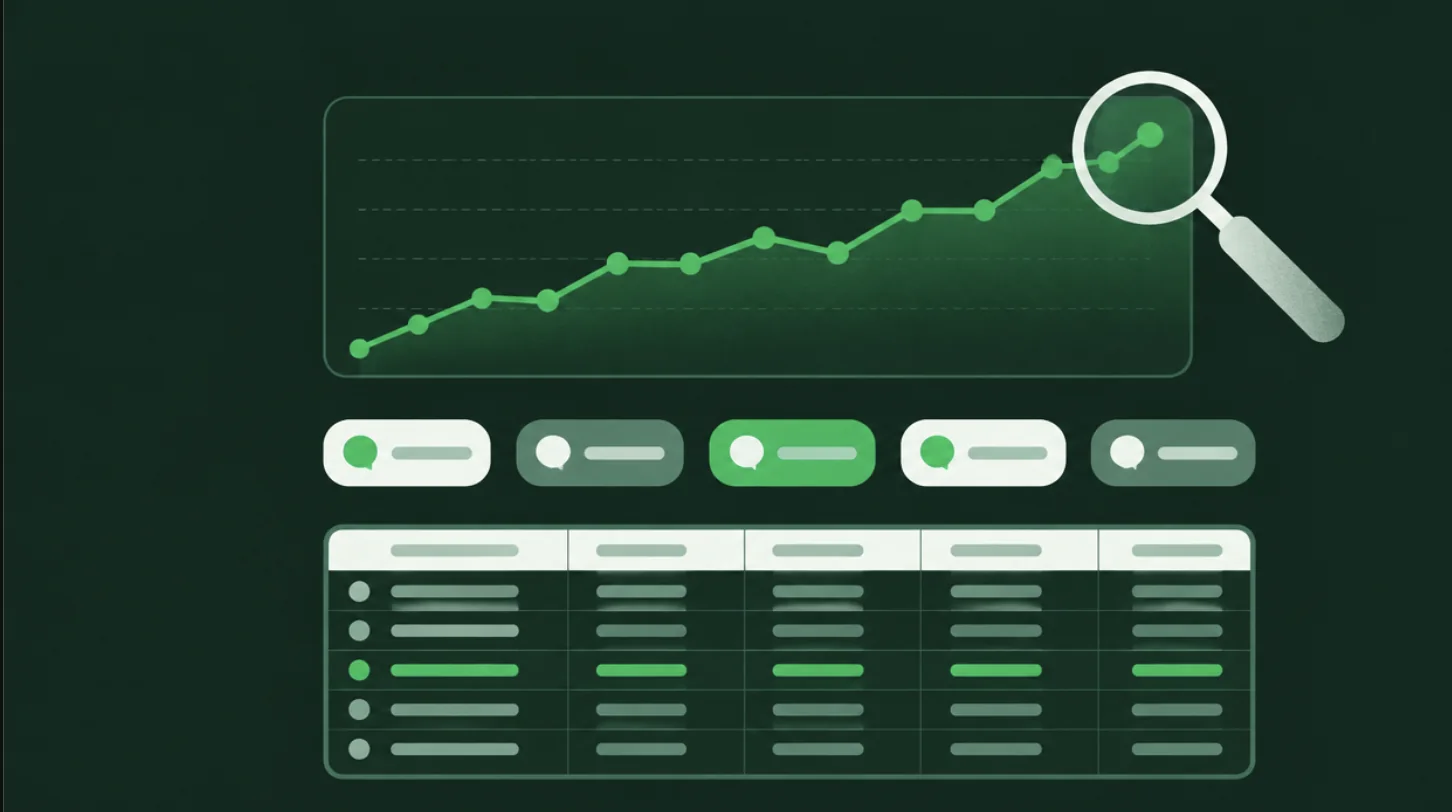
How do you know AI search optimization is working? That is the question every serious business should ask before it spends a dollar. There is no Search Console for ChatGPT, and any AI visibility tool that claims to show you exact prompt volumes is estimating. What you can measure, today, for free:
- AI referrals in Google Analytics 4. chatgpt.com, perplexity.ai, copilot.microsoft.com, claude.ai and gemini.google.com show up as sources. Build one report that groups them and watch it monthly. This is where our 40 % figure comes from.
- UTM parameters the assistants keep. ChatGPT often appends
utm_source=chatgpt.comto the links it cites. Keep the parameters in your form data so you can see which leads came from an answer, not a search. - A "how did you find us" field. One question on your contact form with "AI assistant (ChatGPT, etc.)" as an option. Low tech, and the only source of truth for assistants that hide referrers.
- A monthly prompt check. The same 20 questions, in the same assistants, logged in a spreadsheet: mentioned or not, position, what was said, which competitor was named instead. It takes an hour and it is the closest thing to ChatGPT rank tracking that reflects what your customers actually see.
- Transparent reporting. Whoever does this work for you should send you these four numbers every month, with the raw data, not a proprietary score.
How can an AI search monitoring platform improve your SEO strategy? At scale, a good one runs hundreds of prompts, tracks your share of voice against competitors, and shows which pages and third-party sources the assistants cite, which tells you exactly what to publish and where to get listed next. That is real value, but it is a layer on top of these basics, not a substitute for them. Get the free baseline running first; within a month you will know whether you need a platform, and you will have the numbers to judge one against.
How to choose a provider: five things to expect, four things to refuse

Because the field is new, the providers range from serious to snake oil. A good one does five things: it audits whether assistants can find, read and trust your site; it fixes the site itself (rendering, structure, structured data, speed), not just "content"; it builds the question pages and the off-site consistency; it publishes something every month; and it gives you transparent reporting: the four numbers above every month with the raw data attached, so you can check them yourself. Pricing is a monthly retainer, because the work is continuous, and you should be able to cancel.
- Refuse guarantees of "ranking #1 in ChatGPT". Answers vary by user, phrasing, location and day. Anyone guaranteeing a position is guessing or lying.
- Refuse work that ignores your website. If the proposal is all "AI-optimized content" and no fixes to how the site is built and served, the retrieval problem stays unsolved and nothing else matters.
- Refuse opaque reports. A proprietary "AI visibility score" without the referrals, prompts and leads behind it is marketing, not measurement.
- Refuse long lock-ins. The right structure is month to month, paid against delivered work. If an agency needs a 12-month contract to make it work, it does not work.
That is the standard we hold ourselves to, point by point, on our AI search optimization services page: what the work includes, the four numbers we report every month with the raw data attached, and how we start. Every Clicalto project includes the site build or redesign, structured data, llms.txt and Google Business Profile; new pages every month and a monthly report of AI mentions and referrals are sized to your business, on a monthly retainer with the first charge only when you approve the first delivery. It starts with a free 20-minute demo call, not three sales calls.
Mistakes that quietly kill AI visibility

The real risk in AI search optimization is not doing it wrong in some exotic way; it is doing ordinary things that make you invisible to the model. These are the ones we fix most often.
- A beautiful site nobody can parse. Single-page builders, text inside images, headings that are design elements rather than questions. Gorgeous to humans, blank to models.
- Blocking crawlers to "protect content". You protect it from the only readers that could send you customers.
- Ten pages that all say the same thing. Assistants cite the page that answers the question best, not the site that repeats itself most.
- Inconsistent facts. Two phone numbers, three spellings of the name, prices on Instagram that do not match the site. Each inconsistency is a reason to recommend someone else.
- Publishing once and stopping. Recency matters. A site last updated in 2024 is, to a model, a business that may not exist anymore.
- Measuring nothing. If you cannot see referrals from chatgpt.com in your analytics by the end of month one, you cannot manage the work. Set up measurement before content.
Frequently asked questions
What is AI search optimization?
AI search optimization is the practice of making your business the source that AI assistants such as ChatGPT, Google AI Overviews, Perplexity and Gemini cite or recommend when they answer a question. It combines classic SEO (so the assistant's web search finds you) with answer-first content, structured data, consistent business facts and third-party corroboration (so the assistant understands and trusts you enough to name you). AI visibility optimization and AI discoverability describe the same work.
How does AI search optimization work?
In three steps that mirror how an assistant answers. Retrieval: the assistant runs a web search and reads the top results, so your site must be crawlable and readable. Extraction: it pulls facts from those pages, so each page must answer one question directly with matching structured data. Trust: it cross-checks your facts against Google Business Profile, directories, reviews and press, so everything must be consistent. Optimize for those three decisions and the recommendations follow.
Is AI search optimization the same as SEO?
No, but it is built on it. SEO earns a position on a results page; AI search optimization earns a mention inside a generated answer. Because every assistant runs a web search behind the scenes, crawlability, speed, relevance and authority remain the foundation. The AI layer adds direct answers, structured data, consistent facts across the web, llms.txt and question-shaped pages. One well-run program improves both.
What is the difference between AI search optimization, GEO and AEO?
Only the name. Generative engine optimization (GEO), answer engine optimization (AEO), LLM SEO and AI SEO are marketing terms for optimizing to be cited in AI-generated answers. The tactics overlap almost completely. Judge the work by whether assistants start mentioning you, not by the label on the proposal.
How do I get ChatGPT to recommend my business?
Be findable, specific and corroborated. State your services, city, languages and who you serve in plain HTML; keep name, address and phone identical everywhere; earn reviews that describe the actual service; get mentioned on the "best X in city" pages Google already shows; and add structured data plus an llms.txt file. Then track chatgpt.com referrals in GA4 and ask ChatGPT your 20 key questions monthly to confirm it is working.
How do I rank in ChatGPT?
You cannot buy or register a ranking. ChatGPT runs a web search for local and commercial questions, reads the top results, cross-checks Google Business Profile data and reviews, and names the businesses that appear consistently with the specifics the user asked for. To rank in ChatGPT: make your specifics explicit on your site, get listed on the third-party pages that already rank for your query, keep a complete Google profile with detailed reviews, publish pages that answer the exact questions people ask, and let AI crawlers read your site.
How can an AI search monitoring platform improve my SEO strategy?
By showing you what the assistants actually cite. A good platform runs hundreds of prompts, tracks your share of voice against competitors and lists the pages and third-party sources behind each answer, which tells you which questions to publish pages for and where to earn listings. Start with the free baseline (GA4 referrals, UTM parameters, a form field and a monthly manual prompt check) so you can judge whether a paid platform changes any decision.
How do I choose who to hire for this?
Ask four questions. Does the proposal fix the website itself, or only produce content? Will they show you a number from a real client, with the analytics behind it? Will they show you how the assistants see you today before asking for anything? Can you cancel monthly? Refuse guaranteed ChatGPT rankings, proprietary visibility scores with no data behind them, and twelve-month lock-ins. Our own answers are laid out on our AI search optimization services page at clicalto.com/en/ai-search-optimization-services.
How long does AI search optimization take to show results?
Technical fixes (rendering, robots.txt, structured data) are picked up within days to weeks. Trust signals (reviews, citations, consistency) compound over two to three months. On our client sites, referrals from chatgpt.com appeared in the first month after launch and leads attributable to AI assistants within six weeks.
Does llms.txt really matter?
It is cheap and harmless, and a growing number of assistants and crawlers read it. Think of it as a one-page brief that tells a model what you are before it reads anything else. We add it to every site we build. It does not replace structured data or good pages.
How much does AI search optimization cost?
Serious work is a monthly retainer, because sites, profiles and content need continuous attention; one-off audits rarely change outcomes on their own. How much depends on size: how many pages, languages and cities, and how much new content a month. At Clicalto, showing up on Google and in AI is one job, with your agentic website included; after a free 20-minute demo call we send you a proposal made for you. We bill at the end of each month, only if you're happy.
Real case · Plastic surgeon in Bogotá
More than 10 patients booked in his first 3 months. Patients find him on ChatGPT and on Google.
This is the site of Dr. Daniel Ramos, a plastic surgeon in Bogotá.
Patients confirmed by the doctor as of 4 October 2026. Clicks and visits: his Google Analytics; the 73% is from September (2–29) and the screenshot covers 1 July to 25 October. A real case, not a promise.
Demo call · free
Tell us about your business. We'll show you how to reach the first page.
It's for getting to know each other. You tell us about your business, we research for free how people search for you and what it would take for you to show up, and we show you live how an agentic website works.
- You tell us about your business
- We research how people search for you, and how much
- We show you how to show up and how we work
20-minute video call, in English or Spanish. Free, no commitment. If we're not a fit, we'll tell you straight.